London W12 0BJ 186 Du Cane Road Incorporated 31 August 2026 Company 17428571
The Sweet & Sip counterwalked in service order
A take-away counter is a short machine with three ends: something is baked at one, poured at the next, bagged and handed over the pass at the third. THE SWEET & SIP LIMITED is fitting that machine into 186 Du Cane Road, and this sheet is laid out the way the counter is — one station at a time, each naming what leaves it and in what.
The three stations on this sheet are bake-off, pour and the pass, then the two tools: a batch yield sheet and an allergen matrix.
The sheets behind this one
Bake-off
Fig. 01 — one tray through the deck, read left to right: the stages along the foot, the core temperature up the side.
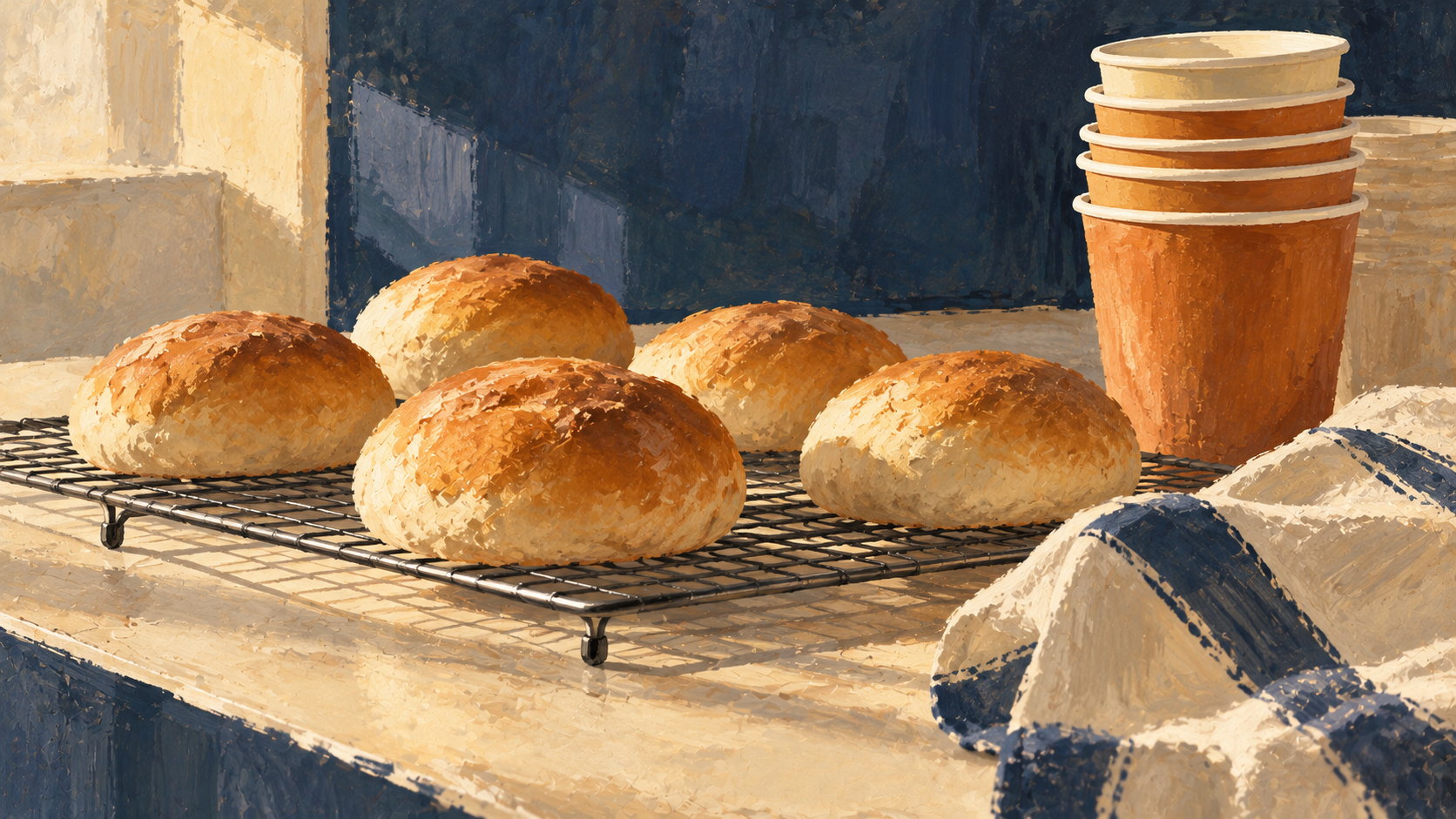
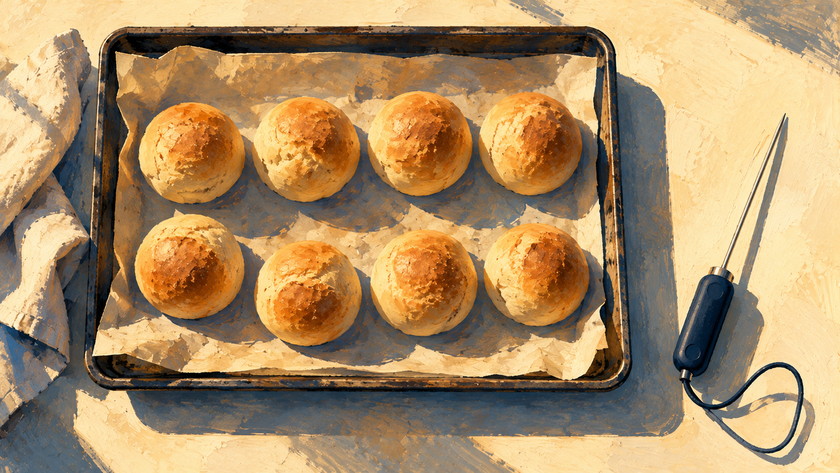
The deck oven is the only heat on the sweet side and takes one tray at a time. It runs the programme written on the station card, not one set by eye at the dial. A probe goes into the deepest item on the tray — not the edge, not the one nearest the door — and the reading goes on the bake sheet before the tray is moved.
The fall after the draw is logged rather than watched: from 63 °C down to 8 °C inside ninety minutes, then the chiller. A tray that stalls on the bench in the warm half of that run is written up as a cooling record, not as if it had kept time. Everything unsold at close is counted off the rack before it goes to food waste, so the count and the waste are one number.


Pour
The drinks side is three things in a row: water at temperature, a timed extraction, and milk that has not stood out of the fridge. The grinder is set at open against a shot timer, not against taste at the end of a queue. A jug left on the counter is the longest-standing risk on this side of the shop.
The drawing pours once on load; under reduced motion it is drawn already poured, lid on.
- Milk
- At 8 °C or below; the jug is rinsed and racked between drinks.
- Ice
- Scoop holstered on the wall; the well is emptied and washed at close.
- Remade
- Any drink that stood while the rest of the order was bagged.
The pass
Nothing crosses the pass unlabelled, and the allergen question is asked at the ticket — out loud, every order, before a bag is opened.
The pass is a plank with a ticket rail above it, the only place an order becomes something a person carries away. The ticket is read back — item, size, any change to the standard build — before anything is bagged.
What goes on the fold is the item, the date and the packing time; a filled item carries its components as well, because that is the line a question at the counter is really asking about. The answer is checked against the folder rather than remembered.
Two things are refused here rather than argued about: hand-over of anything unlabelled, and a hot box stacked on a cold bag. Both are easier to refuse at the rail than to explain at the door.
Batch yield sheet
A batch does not divide into portions neatly, and the remainder is the whole argument of a morning. This sheet does the division out loud: three numbers in, four counts out, and the working written underneath them.
Allergen matrix
A finished item is rarely one thing, and its declaration is the union of its components. Tick what sits in each and the sheet below names where every allergen came from — the part that matters when one component is swapped. The fourteen stand in the same order in every component, so a row is read the same way twice.
What the register says
No food hygiene rating appears anywhere on this site: a rating is awarded after an inspection, and none has taken place.
The painted plates on this sheet are illustrations. None of them is a photograph of this address, and nothing in them records anything made, poured or sold.
What follows is the registered entry, and the only set of facts about this company that this site states.
- Registered name
- THE SWEET & SIP LIMITED
- Company number
- 17428571
- D-U-N-S number
- 235115709
- Incorporated
- 31st August 2026
- Jurisdiction
- England and Wales
- SIC code
- 56103 — take-away food shops and mobile food stands
- Registered office
- 186 Du Cane Road, London, W12 0BJ, United Kingdom
- Order line
- orderline@thesweetandsip.shop